
Federal Reserve Cuts Interest Rates Amid Economic Uncertainty |
Central Bank's Decision Aims to Bolster Economy Amid Inflation and Labor Market Concerns |
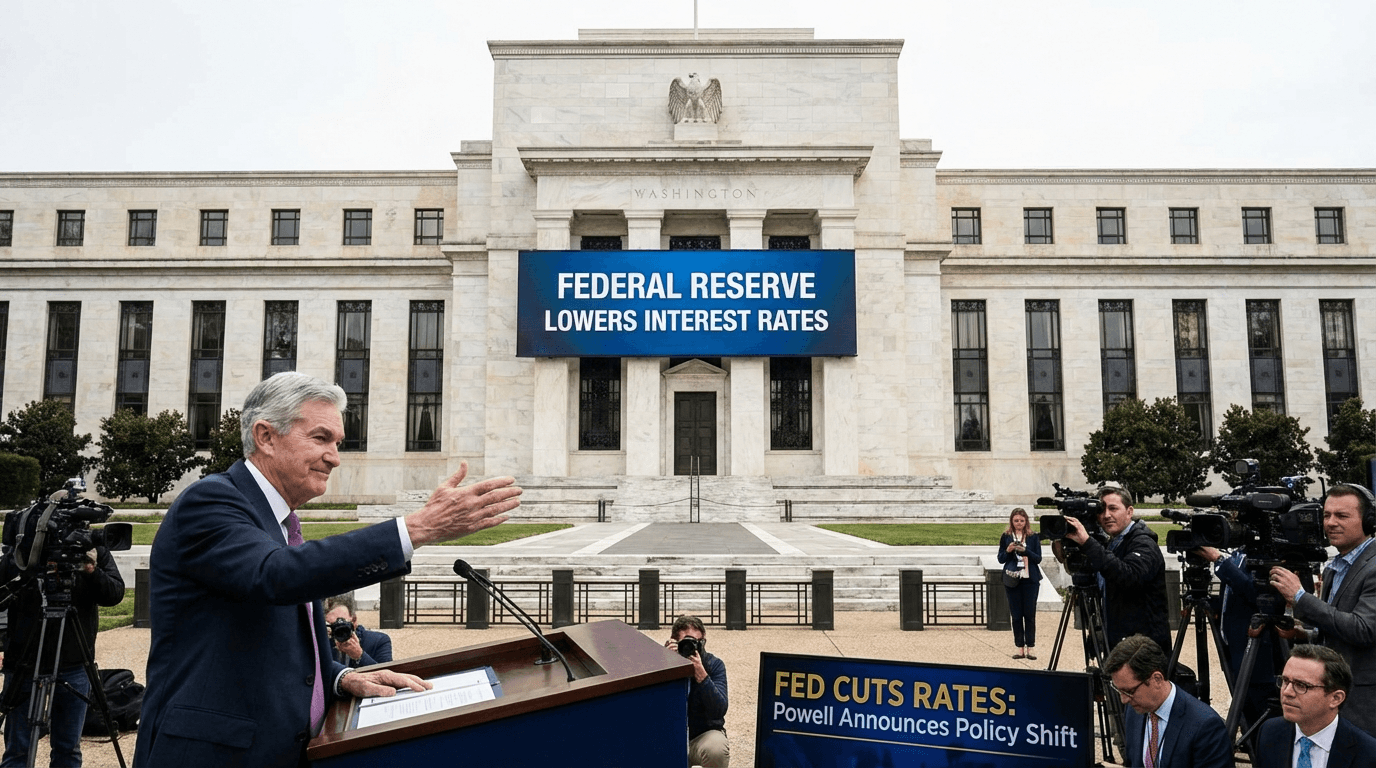
The Federal Reserve has reduced its benchmark interest rate by 0.25 percentage points, bringing it to a range of 3.5% to 3.75%.
This marks the third rate cut since September, reflecting the central bank's response to ongoing economic challenges.
Despite inflation remaining above the Fed's 2% target and a cooling job market, the decision underscores the need to support economic growth.
Fed Chair Jerome Powell emphasized the importance of maintaining a strong labor market while managing inflation risks.
He noted that the recent government shutdown has delayed key economic data, complicating the decision-making process.
In addition to the rate cut, the Fed announced plans to purchase $40 billion in Treasury bills starting December 12.
This move aims to manage market liquidity and ensure effective control of interest rates.
Powell clarified that these purchases are not a shift in monetary policy but a strategy to maintain ample reserves.
For consumers, the rate cut has mixed implications.
Interest rates on savings accounts and certificates of deposit are expected to decline, though they remain attractive compared to previous years.
Mortgage rates, already low due to market anticipation, may continue to fall slightly, potentially dipping below 6%.
Credit card interest rates, still historically high, could see gradual relief, providing some financial alleviation for debtors.
However, auto loans are unlikely to significantly decline soon due to persistent high vehicle prices and record-level subprime delinquencies.
Small businesses stand to benefit from the lower interest rates.
Reduced borrowing costs can facilitate expansion plans, equipment purchases, and hiring initiatives.
Lower monthly payments on existing variable-rate loans can improve cash flow, allowing businesses to allocate resources to other operational needs.
Additionally, the rate cut may boost consumer spending, as lower borrowing costs encourage purchases of homes, cars, and other goods.
This potential increase in demand could positively impact retailers and service providers.
However, the rate cut also reflects concerns about the broader economy.
Inflationary pressures, partly driven by tariffs, continue to pose challenges.
Powell acknowledged that tariffs are pushing up prices in some categories of goods, resulting in higher overall inflation.
He stated that the effects on inflation are expected to be relatively short-lived but emphasized the need to ensure that a one-time increase in the price level does not become an ongoing inflation problem.
The Federal Reserve's decision to cut interest rates reflects a delicate balancing act.
By lowering borrowing costs, the Fed aims to stimulate economic activity and support the labor market.
However, the central bank remains vigilant about inflation risks and the potential need for future policy adjustments.
As the economic landscape continues to evolve, the Fed's actions will be closely monitored for their impact on both consumers and businesses. |
0 Comments
Join the conversation
Be the first to comment
Share your thoughts above.