
Melbourne Researcher Explores the Secrets of Distant Worlds |
A nearly $500,000 NASA grant supports Florida Tech research into planetary climates |
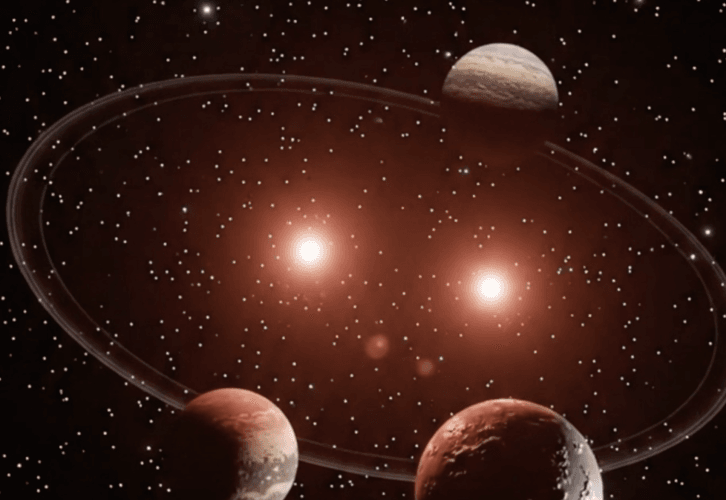
A new research award is giving Melbourne a role in one of astronomy’s most compelling questions: which distant worlds might have conditions suitable for life?
Florida Tech space scientist Howard Chen has received a nearly $500,000 NASA grant, announced September 21, to investigate how neighboring planets influence one another’s climates.
His team will begin with TRAPPIST-1, using computer simulations to explore how gravitational interactions shape these distant environments.
The grant also creates research opportunities for students working with Chen, connecting classroom physics with questions at the frontier of astronomy.
TRAPPIST-1 is an extraordinary place to start: about 40 light-years away, it has seven rocky planets roughly the size of Earth.
All seven travel around their star on paths smaller than Mercury’s orbit around our Sun.
That sounds like a recipe for overwhelming heat, but the host star is a small, cool red dwarf, very different from the Sun.
Three planets, designated e, f and g, orbit in the system’s habitable zone.
That term describes distances where a suitable atmosphere could allow liquid water on a planet’s surface.
Being in the habitable zone is a possibility, not proof of an ocean or living organisms.
Atmospheres matter enormously, and scientists are still investigating whether these worlds have the right ingredients.
The James Webb Space Telescope has begun examining the system, helping researchers explore questions about its planets’ atmospheres.
Chen’s project adds another piece to the puzzle: the gravitational influence of nearby worlds can complicate assumptions about a planet’s climate.
His simulations will explore different orbital histories and help predict the light signatures that could reveal atmospheric conditions.
Think of it as looking beyond a planet’s address to understand the neighborhood that helped shape it.
For Space Coast readers, the project offers an engaging reminder that space exploration includes the patient work of interpreting worlds we cannot visit.
It is also a useful question to share with a curious student: what would you need to know before calling another planet Earth-like?
Size is only the beginning, and the next clues may come from research taking shape right here in Melbourne. |
0 Comments
Join the conversation
Be the first to comment
Share your thoughts above.